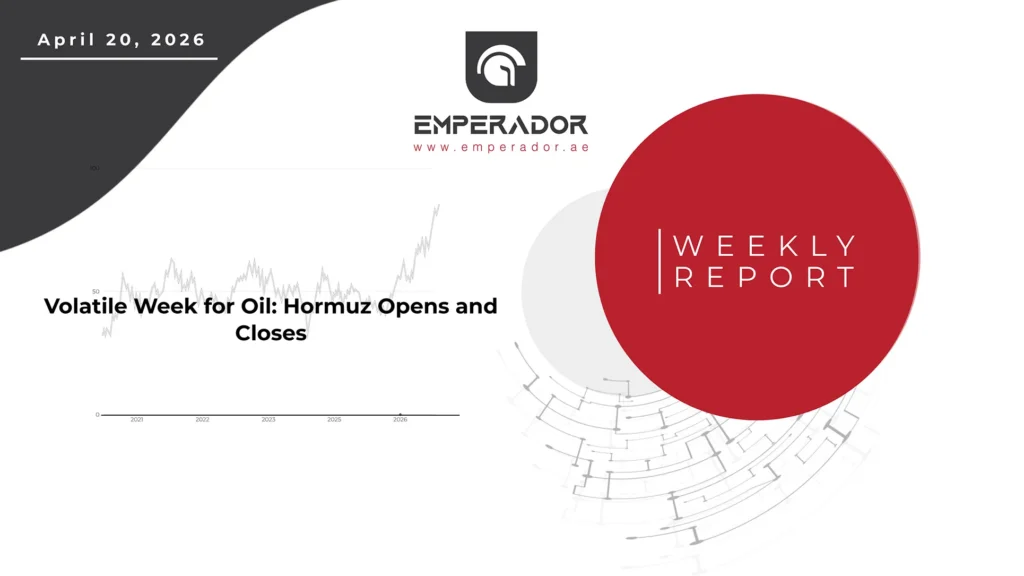
During 13-19 April 2026, oil and bitumen markets experienced strong volatility due to geopolitical tensions in the Middle East. Despite a two-week ceasefire between Iran, the United States, and Israel, oil prices continued to fluctuate in a wide range.
Brent crude oil prices moved between $86.09 and $99.80 per barrel due to uncertainty and rapidly changing conditions in the Middle East.
At the beginning of the week, oil prices were under pressure due to rising tensions between Iran and the United States over the Strait of Hormuz. Iran kept the Strait under control, and in response, the US started the naval blockade of Iranian oil exports on April 13. This rising tension increased concerns about oil supply disruption.

Oil markets were also influenced by news of a possible second round of negotiations between Iran and the United States. Expectations of diplomatic progress limited further increases in prices.
April 17 was a key turning point for oil markets. After a ceasefire agreement between Lebanon and Israel, tensions in the Middle East eased. The Iranian foreign minister announced that the Strait of Hormuz would remain fully open until the end of the ceasefire period. This significantly reduced supply concerns. As a result, Brent crude prices fell sharply by about %10 below $90 per barrel and reached their lowest levels in recent weeks.
However, this downward trend was short. As the US continued its naval blockade of Iranian ports, tensions increased again. In response, Iran closed the Strait of Hormuz once more, which reshaped the energy market at the end of the week.
This instability in crude oil affected bitumen markets. Limited supply, higher freight rates, and rising fuel oil costs led to strong price fluctuations and upward pressure on bitumen prices.
Higher bitumen prices were seen globally, especially in Asia and Africa, which are major importers of Iranian bitumen. For example, prices in Singapore reached around $700 per ton, while South Korea’s prices were about $580 per ton, both of which are significantly higher than pre-war levels.