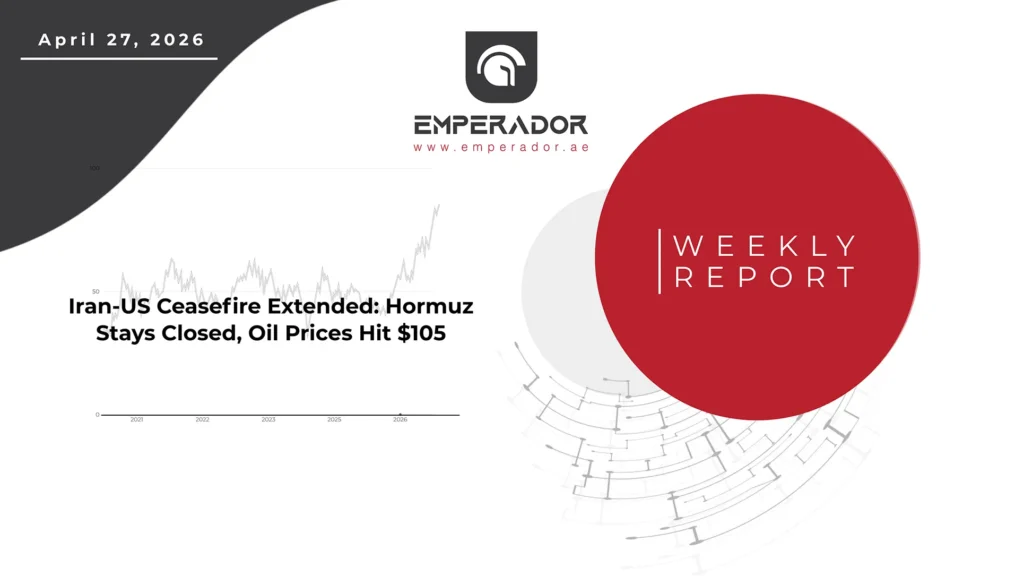
During 20-26 April 2026, Brent crude oil prices rose to the range of $95.48 and $105.33 per barrel. The oil price trend was upward throughout the week, mainly due to supply disruption in the Middle East. By the weekend, Brent crude reached around $105 per barrel.

At the start of the week, oil markets expected the expiry of the Iran-US two-week ceasefire, which was scheduled for Tuesday. This uncertainty supported crude prices. US President Trump later announced that the ceasefire would be extended. While this reduced the risk of war, supply disruptions continued, and oil prices rose.
The main issue was the condition in the Strait of Hormuz. Iran kept the Strait largely closed, while the US maintained its naval blockade of Iranian exports. As a result, oil supply from the Middle East remained disrupted. Shipping conditions stayed unstable, and freight and insurance costs remained high.
In addition, the seizure and diversion of vessels by both Iran and the US added concerns about further supply disruption.
During the middle of the week, expectations of possible diplomatic talks between Iran and the US limited further price rises. Toward the end of the week, however, reports confirmed that US envoys would not join the planned negotiations. This weakened hopes for a near-term solution for the oil supply.
In the bitumen market, bitumen prices were lower than the previous week but still higher than pre-war levels. Prices were around $665 per ton in Singapore and $552 per ton in South Korea, which fell about $35 per ton.
Bitumen demand from Asia and Africa remained strong. However, exports continued to face serious disruptions due to shipping restrictions in the Strait of Hormuz.